

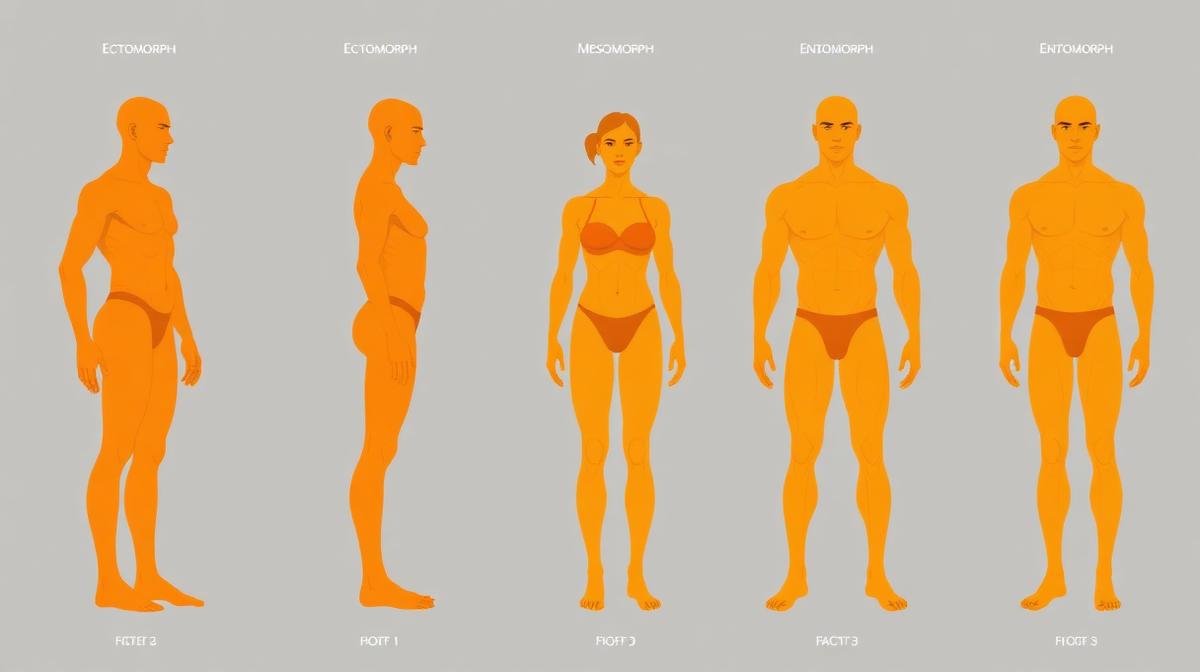
The Science (and Pseudoscience) of Body Types
Somatotype theory was developed by psychologist William Sheldon in the 1940s. He categorized human physiques into three types: ectomorph (thin, long-limbed), mesomorph (muscular, broad-shouldered), and endomorph (rounded, wider hips). Sheldon originally linked these to personality types - a claim that has been thoroughly debunked.
The honest scientific position: somatotype theory has weak support as a rigid classification system. Most people are hybrids (ecto-mesomorph, endo-mesomorph) and body composition is primarily determined by diet, training, and lifestyle - not an immutable genetic category.
The Practical Value
Despite the weak science behind rigid categories, body type tendencies are useful as loose guidelines for training and nutrition starting points:
- Ectomorph tendencies: Hard time gaining weight, naturally lean, higher carb tolerance. Focus on progressive overload, caloric surplus, and patience. May need 500+ calorie surplus to gain weight.
- Mesomorph tendencies: Responds well to training, gains muscle relatively easily, balanced build. Moderate macros, standard programming works well.
- Endomorph tendencies: Gains weight easily, carries more body fat, wider frame. May benefit from lower carb intake, higher NEAT, and more cardio integration.
The Better Approach
Rather than identifying your body type and following a rigid protocol, use your body's actual response to training and diet as the real guide. Track your progress for 4-6 weeks, then adjust. If you are not gaining muscle, eat more. If you are gaining too much fat, reduce calories or increase activity. Your body's response tells you more than any quiz or category system.
Take the Quiz
Curious where you fall? Take our free Body Type Quiz for personalized training and nutrition suggestions based on your build, metabolism, and training response.